When my brother got married in Chennai, my Hyderabadi cousin opened the wedding website on her phone and said, "Why does this look like a North Indian invite with the word Muhurtham pasted in?" She was right. We had picked a generic gold-and-maroon template and tried to South Indianise it with a font change. It did not work.
The trouble with "South Indian wedding website" as a category is that it pretends there is one South India. There is not. Tamil Iyer, Tamil Iyengar, Telugu, Reddy, Kannadiga, Malayali, Mangalorean, Konkani. Each has its own rituals, colours, and rhythm. A template that works for one will feel slightly off for another.
This is a guide to picking, building, and writing a wedding website that fits your specific tradition, not a sanitised pan-South-Indian template.
Pick a visual language tied to your community
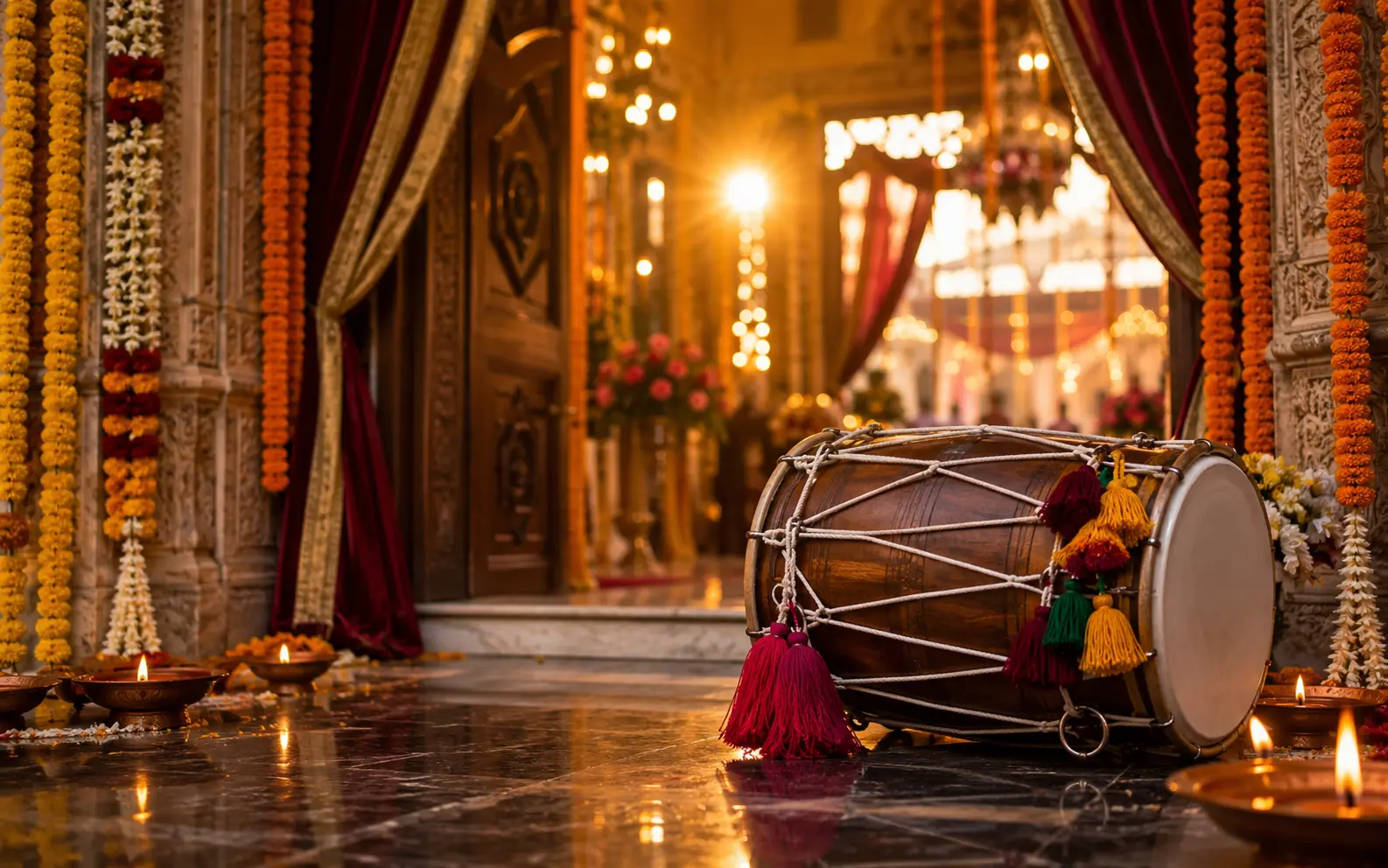
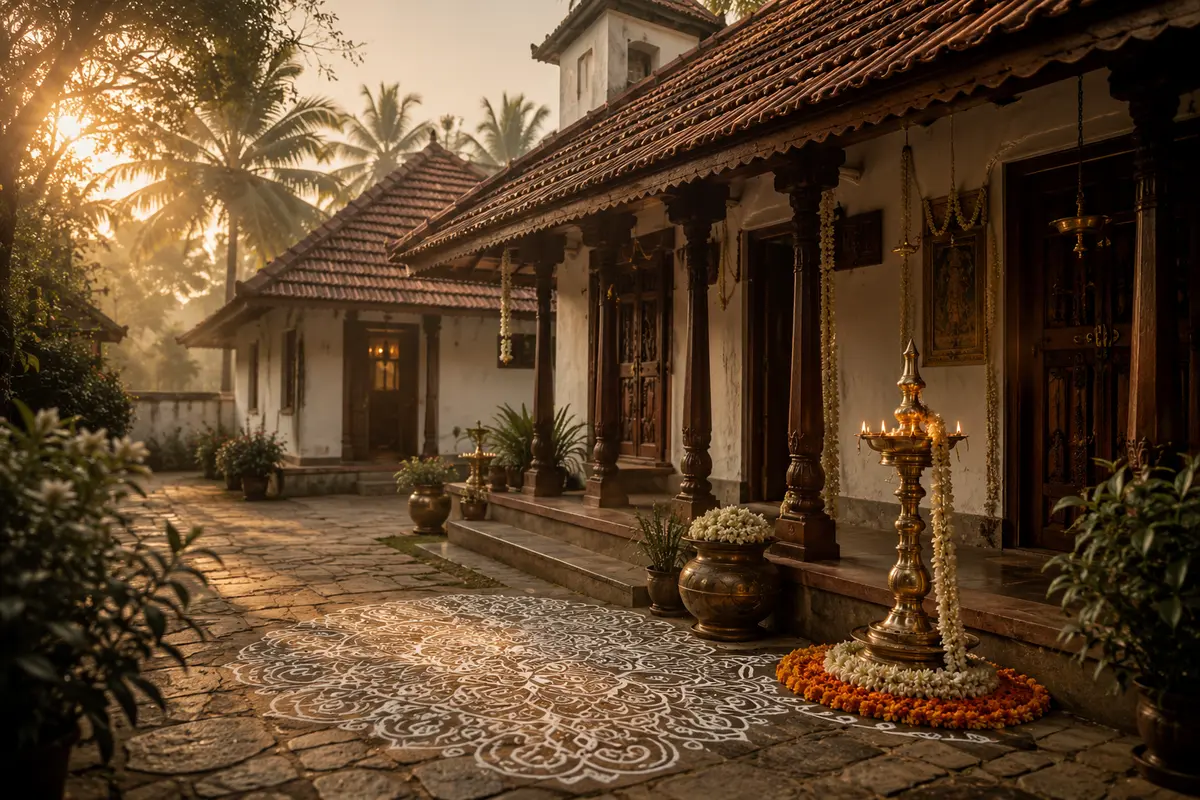
The North Indian wedding aesthetic is heavy on red and gold, with marigolds and roses everywhere. South Indian visuals do not work the same way. They lean into kolam and muggu patterns at the threshold, jasmine garlands, banana leaves, temple architecture, and a slightly more saturated, sun-baked palette.
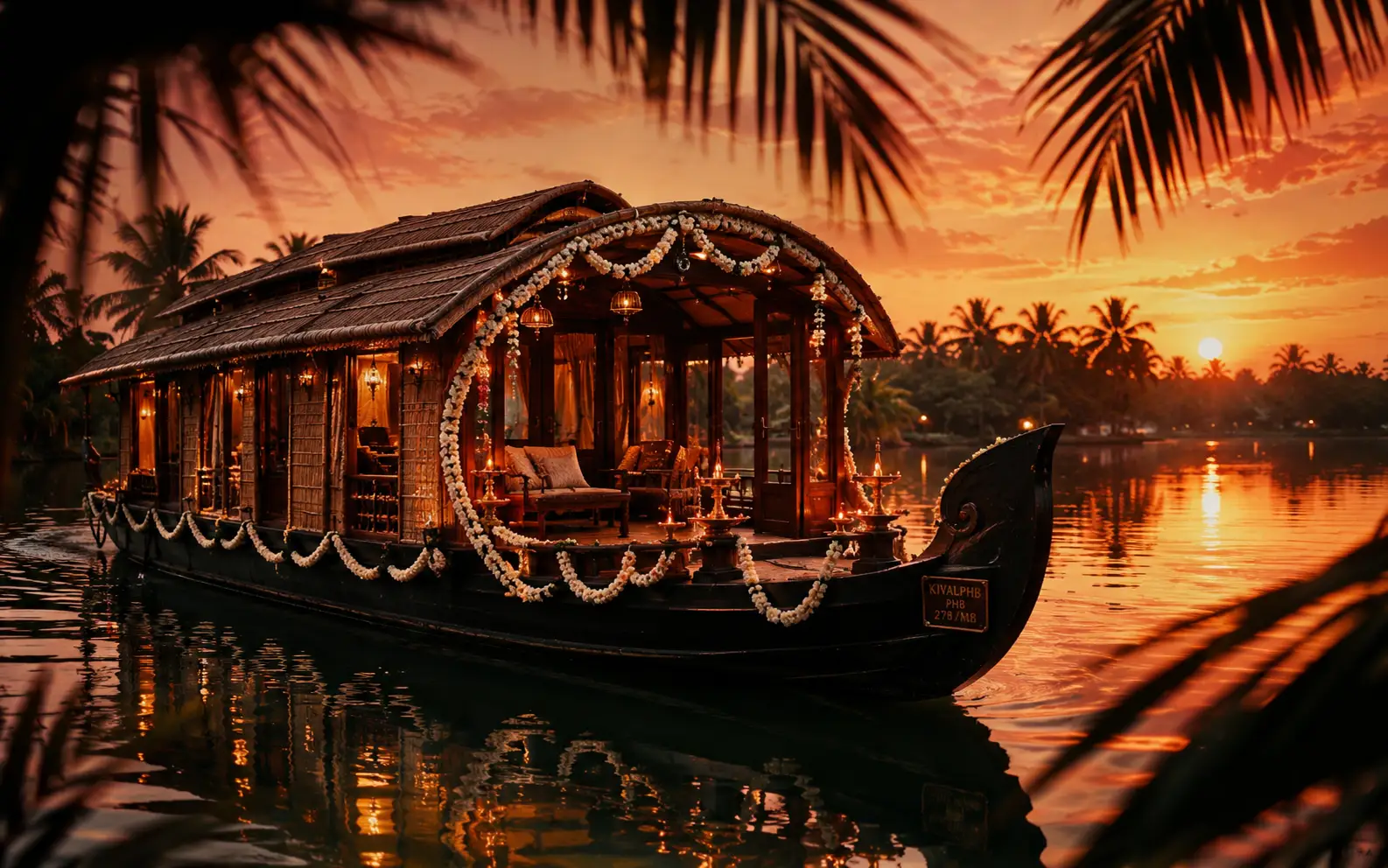
Tamil weddings often feature kanchipuram silk colours: peacock blue, parrot green, dusty pink. Telugu weddings frequently use temple gold with a green or cream base. Kerala has its own thing entirely with cream, off-white, and gold on a deep green or maroon background.
If you are picking a template, hold it next to a photo from your sister's or cousin's wedding and ask whether the two look like they belong to the same world. If they do not, the template is fighting you.
Plan for the muhurtham timing problem
South Indian weddings are scheduled around a precise muhurtham, which is often at an awkward hour like 8:47 in the morning or 11:23 at night. The ceremony itself is the centre of the day, and everything else is timed around it.
A good wedding website should let you put the muhurtham timing front and centre, separate from the reception or the lunch. Generic templates that assume one wedding date and one start time make a mess of this. You end up with a banner that says "Wedding starts at 9 AM" when actually the muhurtham is at 9:18 and the breakfast was at 7:30.
Be precise. Guests, especially older ones, will set alarms based on what you write.
Handle the multi-day ritual structure honestly
Functions like Nichayathartham, Pellikuthuru, Mehendi, Sangeet, the wedding day itself, and Reception often span three to five days. Each has its own venue, time, and dress code. Tamil weddings add the Janavasam procession. Telugu weddings include a separate Pellikoduku for the groom.
If your website only lists one event, you are setting yourself up for fifty WhatsApp messages asking about the rest. List each function as its own block, with the ritual name in the original language and a one-line explanation in English for younger or non-community guests.
Adding a one-line note like "Janavasam is a procession where the groom is taken around in a chariot. Dress comfortably, we will be standing for about an hour" makes the invite feel like a friend explaining things, not a corporate calendar.
Get the names right, including the family ones
In a lot of South Indian families, the invitation lists not just the couple but the parents, the grandparents, and sometimes the house or family name. "With the blessings of late Sri Subramanian and Smt Lakshmi" is not a flourish. It is how the family is presented to the wider community.
A wedding website builder that forces you into a two-name template, bride name and groom name, will not accommodate this. Look for one that lets you add the family lines in the order your community uses them. Tamil families often list the bride's side first. Telugu families sometimes lead with the groom's side. Check what your family expects before you publish.
Including a phrase in your community's language at the top, like "Subhamastu" or "Mangalyam" or a short Sanskrit line, also lands well with older guests without alienating anyone else.
Build RSVP for big joint families, not for couples
South Indian weddings often have guest lists in the high hundreds, spread across Chennai, Bengaluru, Hyderabad, Kochi, the Gulf, and the US. RSVP cannot be a simple yes-no toggle.
Look for a form that captures: how many in the party, dietary preference (a lot of these weddings are strictly vegetarian, sometimes Jain-friendly, sometimes onion-and-garlic-free), arrival city, and which functions they are attending. That last one matters because your uncle from Singapore might come only for the muhurtham and reception, not the sangeet.
Also: do not collect a phone number you do not need. Indian guests are wary of forms that look like they will end up on a marketing list. Keep the form short.
Add accommodation and travel notes for outstation guests
If you have NRI cousins, in-laws from another city, or guests who will need to fly in, the wedding website is the right place to put hotel suggestions, the nearest airport, and rough rates. Not a hard sell, just "if you are flying in, here are three hotels we have negotiated rates with, here is the airport code, and here is the WhatsApp number for our travel coordinator."
This is the kind of detail that prints in a card as a tiny illegible footnote. A website handles it well. Use the space.
Final Thoughts
The short version: pick visuals that match your community specifically, get the muhurtham timing precise, list each ritual clearly, write the family lines the way your family writes them, and build the RSVP for big lists. The rest is decoration.
ShaadiOra's Muggu Vaakili template is built around the kolam-inspired visual language and the multi-event structure South Indian weddings need. You can preview it and start customising at shaadiora.com/templates.
Frequently Asked Questions
Can one wedding website work for both Tamil and Telugu families?+
Yes, if the template lets you customise ritual names, family lines, and ceremony order. Avoid templates that lock you into a fixed ritual sequence. Look for one where you can rename and reorder events to match either family's tradition.
How do I display the muhurtham timing on a wedding website?+
Show the muhurtham as its own block on the events page with the exact time and a short note explaining its significance. Do not bury it inside a general wedding day banner. Older guests will plan their morning around the precise minute.
Should I include both English and a regional language on the invite?+
A short greeting or blessing in Tamil, Telugu, Kannada, or Malayalam at the top adds warmth without making the page hard to navigate. Keep the practical details, date, venue, RSVP, in English so younger and NRI guests have no friction.
Are South Indian wedding websites usually vegetarian-only?+
Many families serve a strictly vegetarian menu, sometimes without onion or garlic, especially for the muhurtham meal. Your RSVP form should let guests flag their preference and note any allergies. Reception menus are sometimes more flexible.

Aditi Rao
Creative Director
Curating high-aesthetic Indian wedding styling guidelines, tech-enabled RSVP dashboards, and digital invitation designs to make your special wedding day seamless and memorable.